It unblocks the user on the spot, then writes the PRD.
Request DemoSlack and support tickets each hold a piece. Nobody can tell a one-off from a pattern.
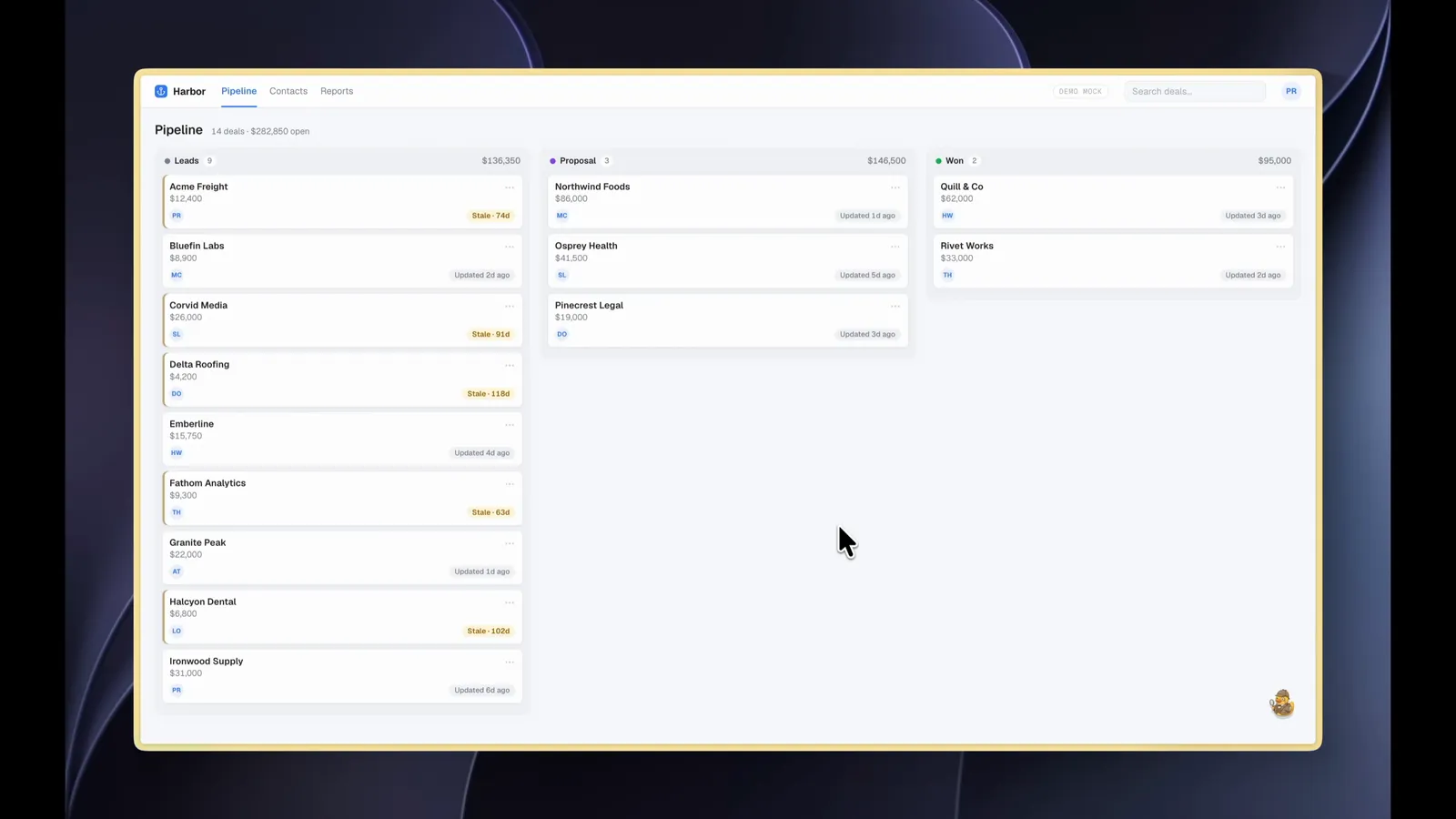
01Notice
The same three steps for the third time in a minute, or a long hunt through menus without finishing anything. The duck steps in with one offer and a not now.
02Unblock
It names the workaround it saw, then does the tedious part for them, like clearing the whole column. The user is unstuck before the conversation ends.
03Ask
If you could change one thing here, what would it be. The answer becomes the headline of the request, quoted exactly, followed by how often it comes up and how much it blocks.
04File
Their request on top, then the goal, the workaround on the recording, frequency and impact. Ready to hand to your coding agent.
One PRD. Their words on top.
A form waits to be found and gets filled in from memory. The duck shows up on the behaviour itself, with the last seconds of the screen already recorded, so the request arrives with the workaround attached and the frequency already known. Nothing is typed into a box.
No. It offers, and acts only after the user says yes. Your team sets guardrails on how much it may do versus only point, and every action it takes is listed on the ticket under Unblocked.
Your PM does, with a PMF engineer at setup. The questions about goal, frequency and impact are fixed in the script; the duck probes on the answers but does not freestyle. It also reads your feature list, so it knows what already exists before it asks.
One card per request: the headline in the user's words, goal, workaround, frequency, impact and what the duck did. With Linear connected the ticket carries the full context, and when the fix ships the user who asked can be told.
Book a demo and watch the duck catch a workaround on a live board.