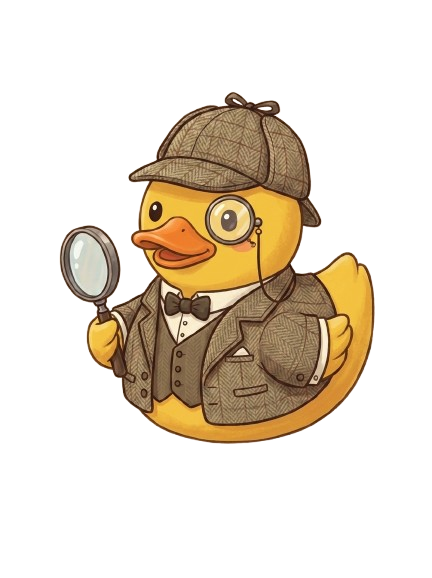
It retries the failure on tape and asks what the logs miss.
Request DemoYour error tracker has the stack trace. It has never met the person who hit it.
01Detect
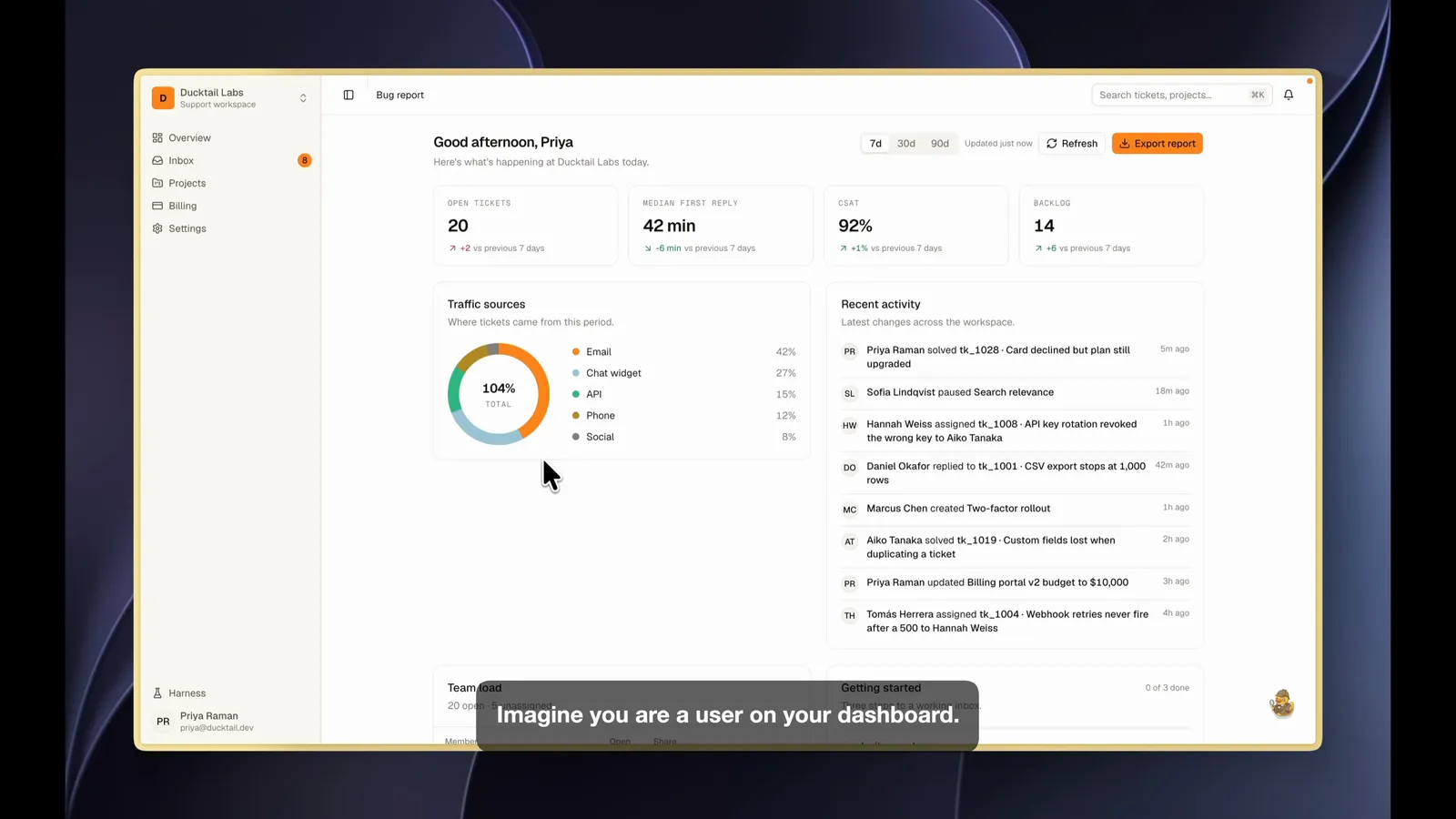
A console error or a burst of rapid clicks calls the duck in. It offers to debug together, and the user can say not now.
02Reproduce
Once the user accepts, a tab recording starts. The duck repeats the click itself, watches the error come back and tries a different route, such as another date range.
03Ask
First time or every time. Is anything waiting on it. What they do instead. The questions come from your PM's script; the duck only probes.
04File
Recording, transcript, the answers and every event in the user journey, errors included, land together. A blocking issue is marked urgent on the way in.
One ticket. No follow-up questions.
No. Those tools already hold the stack trace and the session replay. The duck adds what no trace contains: how often the person hits it, how badly it blocks them and what they do instead, in their own words. The ticket carries both halves side by side.
Your team sets the triggers with a PMF engineer when the SDK goes in. Console errors, failed network requests and bursts of rapid clicking are the usual signals. The duck fires once per page load, and never without an offer the user can decline.
No. The duck first offers to debug together. Recording starts only after the user accepts and confirms the browser's share prompt, and the duck's own chrome stays out of the capture. An interview the user abandons is not charged.
One ticket with the description, steps to reproduce, frequency, urgency and workaround, plus the recording, the transcript and every event in the user journey, errors included. It is written so it can be pasted straight into a coding agent.
Book a demo and watch the duck catch a failure, retry it and file the ticket.